

by Chris Rusing | August 21, 2026 | Accident, Alaska Accident
We are saddened to hear about the crash of a chartered Cessna 441 Conquest near Cape Newenham in western Alaska on Thursday, August 20, 2026, which tragically took eight lives. Our thoughts are with the families, friends, and colleagues of everyone aboard the aircraft.
What We Know So Far
The twin-engine Cessna was carrying six passengers and two pilots. The airplane crashed near the Cape Newenham Long Range Radar Site at approximately 12:15 p.m. local time on August 20, 2026. Among those killed were two employees of the U.S. Army Corps of Engineers, who had apparently chartered the aircraft from Security Aviation, an Anchorage-based charter company. The flight departed Anchorage International Airport and was destined for Cape Newenham, approximately 450 miles southwest of Anchorage.
The National Transportation Safety Board and Federal Aviation Administration are investigating.
The aircraft was a Cessna 441 Conquest II, registration N128EZ, operated by Security Aviation. It is a twin-engine, pressurized turboprop aircraft manufactured by Cessna from 1977 to 1986, intended to fill the gap between Cessna piston aircraft and jets. It can seat up to 10 persons, including one or two pilots.
The Cessna 441 is a pressurized, twin-engine turboprop designed for high-performance passenger and utility operations. Security Aviation operates six Cessna Conquests in Alaska and describes the aircraft as particularly suited to the state’s challenging weather and airport environments.
At this early stage, the cause of the crash is unknown. It would be premature to conclude that weather, pilot decision-making, mechanical failure, airport conditions, or any other particular factor caused the accident.
The Investigation Is Just Beginning
Aviation accidents are rarely explained by a single piece of information.
The NTSB will reconstruct the flight from the beginning, examining the airplane, its maintenance history, the pilots, weather conditions, airport conditions, flight planning, communications, and the circumstances surrounding the final approach.
A preliminary report will be issued within the next few weeks that will establish basic facts, but it will not necessarily identify the cause of the accident. The NTSB’s final probable cause determination may take considerably longer, possibly up to eighteen months.
ALG is also investigating the accident. ALG is familiar with complex accident investigations in Alaska involving Alaska’s unique weather, complex terrain, and, due to remote populations, a diverse group of air carrier operations that serve Alaska’s logistics needs. ALG has been involved in many multi-engine and turboprop accidents, including accidents in Alaska. ALG currently represents passenger families in claims against Bering Air stemming from the February 6, 2025 accident near Nome that took the lives of 10 persons, and against Maritime Helicopters in Alaska for a July 20, 2023 Bell helicopter accident.
Cape Newenham Is a Particularly Challenging Airport

One of the most important aspects of this accident is the airport itself.
Cape Newenham is a remote military airfield serving the Long Range Radar Site. It is approximately 450 miles from Anchorage and is not a conventional commercial airport.
The runway is gravel and 3945 feet long and 531 feet above sea level. FAA information indicates that the runway is situated in challenging terrain, with significant high terrain around the airport, including mountains exceeding 2300 feet.
A pilot approaching an airport surrounded by terrain has fewer options if something goes wrong during the approach. Depending on the aircraft’s location, altitude, airspeed, and runway alignment, a missed approach may not provide the same options available at a conventional airport with long paved runways and unobstructed terrain.
If approached from the north which is the procedure for runway 15, the runway has a 7.7 degree uphill slope. Thus, takeoff from the airport is only to the north toward the ocean and away from the mountains in the opposite direction, which is runway 33. The two published approach procedures for runway 15 state: “MILITARY CERTIFIED AIRCREWS OR AUTHORIZED CONTRACT AIRCRAFT ONLY. NOT FOR CIVIL USE”.
One approach procedure for runway 15 describes it as follows:
1. Runway located on slope of 2306 foot mountain. High terrain both sides and south end of runway.
2. Successful go-around improbable if initiated pasted the missed approach point [which is 2.2 miles from the north end of runway 15]
This does not mean that this unusual and potentially dangerous airport environment caused this accident, but it does mean that the airport environment will be an important part of the investigation.
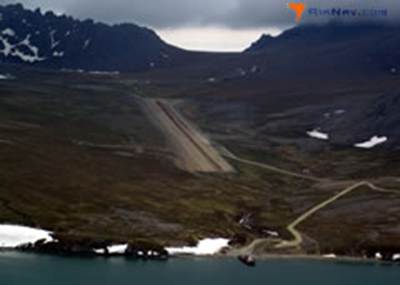
Investigators will need to determine what approach was being flown, what the published procedures required, what weather minimums applied, what information was available to the pilots, and what options existed if the approach became unstable or conditions deteriorated.
Weather and Visibility Will Be Closely Examined
Weather is another obvious area of investigation.
Early reporting indicates challenging weather conditions were present in the area around the time of the accident. A special METAR weather report that the airport approximately 4 minutes after the last ADS-B transmission describe ¼ statute mile visibility with fog and a vertical visibility of only 200 feet above the ground.
Investigators need to determine the precise weather conditions at the time and location of the accident and, just as importantly, what weather information was available to the pilots when they made their operational decisions.
If conditions deteriorated unexpectedly, investigators will need to understand when that deterioration occurred and whether the pilots had meaningful alternatives.
If poor conditions were forecast well in advance, investigators will need to examine the flight planning and operational decisions that preceded the flight.
The Final Approach Will Be Critical
The aircraft’s final flight path may ultimately provide some of the most important evidence.
Investigators will reconstruct the airplane’s altitude, speed, heading, descent rate, and position during the final minutes of the flight.
Investigators will use available ADS-B, radar, satellite tracking, or other flight data, to determine precisely how the aircraft approached Cape Newenham.
The Aircraft’s Maintenance History
The Cessna 441 is a decades-old aircraft design, and the specific maintenance history of N128EZ will therefore be important.
That does not mean the aircraft was unsafe because of its age. Aircraft do not become inherently unsafe simply because they are old. Properly maintained aircraft can remain airworthy for many decades. But the age and operating history of an aircraft make its maintenance records particularly important.
Who Chartered the Aircraft—and Why That Matters
Another unusual aspect of this accident is the relationship between the passengers, the aircraft operator, and the government agency that chartered the flight.
The U.S. Army Corps of Engineers has confirmed that it chartered the aircraft and that two of its employees were among those killed. The aircraft, however, was operated by Security Aviation.
A charter flight can involve multiple parties, each with different responsibilities. There may be an aircraft owner, an operator, a maintenance provider, a chartering entity, a government agency, and potentially other contractors or entities involved in arranging or supporting the flight. There may also be government contracts involved which may contain minimum pilot qualification requirements. ALG is currently involved in a helicopter crash case in Alaska that involved a civilian operator flying under government contract.
A thorough investigation will examine the entire operational structure rather than focusing solely on the two pilots in the cockpit.
The Government Charter Raises Additional Legal Questions
Because the flight was chartered by the U.S. Army Corps of Engineers, there may also be federal-government liability issues that would not arise in an ordinary private charter accident.
The precise legal claims and applicable law will depend on the facts, the contractual arrangements, the status of the passengers, and the relationship between the government and the private aviation company.
Families should understand that the fact that a flight was connected to the federal government does not necessarily mean that ordinary aviation claims disappear.
The legal analysis may involve the Federal Tort Claims Act, federal contracting provisions, Alaska law, contractual provisions, and potentially other federal statutes or regulations. The identity and role of each entity involved will matter.
That analysis should begin early, because the applicable deadlines and procedures in claims involving the federal government can differ significantly from ordinary aviation injury claims.
What Happens Next
The NTSB will lead the investigation, with assistance from the FAA and other agencies.
Investigators will document the accident site, recover the wreckage, examine the aircraft and engines, collect records, interview witnesses, reconstruct the flight, and analyze the weather and operational circumstances.
The families will understandably want answers immediately. Unfortunately, aviation investigations do not work that way. The first reports following a crash are often incomplete. Information changes as investigators recover additional evidence. Early theories can turn out to be wrong.
Aviation Law Group Is Monitoring the Investigation
Aviation Law Group is closely monitoring the August 20, 2026, Cessna 441 Conquest crash near Cape Newenham and the investigation into the cause of this tragedy. At this early stage, it is too soon to reach conclusions about the cause of the accident or responsibility for what occurred.
Aviation Law Group’s Experience
Aviation Law Group, PLLC is a firm devoted exclusively to aviation accident and injury litigation. Aviation Accidents is all we do.
Our attorneys are pilots, aircraft mechanics, or both, and our aviation background allows us to understand the technical evidence that often determines why an aircraft crashed.
Aviation Law Group has extensive experience representing families following fatal aviation accidents throughout Alaska and the Pacific Northwest. Our attorneys are licensed in Alaska and have investigated and litigated aviation accidents involving major airline commercial operators, charter aircraft, seaplanes, general aviation aircraft, and other aviation operations.
Our firm has extensive experience litigating airplane crashes in Alaska and currently represents families involved in the crash of Bering Air Flight 445 near Nome, Alaska. Our experience gives us particular familiarity with the challenges presented by aviation accidents in remote Alaska, including the importance of rapidly preserving aircraft, maintenance, operational, and electronic evidence.
If you or a loved one was aboard the August 20, 2026 flight near Cape Newenham, or if you are a family member seeking information about your legal rights, Aviation Law Group would be honored to speak with you confidentially and without obligation.
You can reach Aviation Law Group at info@aviationlawgroup.com , through Aviation Law Group’s website, or directly at (206) 251-5915.